Smart Home Compatibility 2026: Avoid Costly Mistakes
Advertisements
Understanding smart home device compatibility in 2026 is critical for seamless integration and avoiding financial setbacks, ensuring all devices communicate effectively within your chosen ecosystem.
Welcome to the era where your home anticipates your needs, adjusts to your presence, and responds to your voice. The promise of a fully integrated smart home is exhilarating, yet the path to achieving it is often fraught with complexities, especially concerning smart home compatibility 2026. This guide aims to demystify the intricacies of connecting your smart devices, providing you with the knowledge to make informed decisions and prevent costly errors that can derail your smart home dreams.
Advertisements
Understanding the Smart Home Ecosystem Landscape
The smart home market in 2026 is a vibrant, yet fragmented, landscape. Multiple ecosystems, protocols, and brands vie for consumer attention, each promising a superior experience. Navigating this vast network requires a fundamental understanding of how these systems interact, or often, fail to interact.
At its core, a smart home ecosystem is a collection of devices, software, and services designed to work together. The key challenge lies in ensuring that devices from different manufacturers can communicate and cooperate seamlessly. This interoperability is not always guaranteed, leading to frustration and wasted investment.
Major Smart Home Ecosystems
- Amazon Alexa: A widely adopted ecosystem known for its voice control capabilities and extensive device support. Many third-party manufacturers integrate with Alexa, making it a popular choice.
- Google Home/Assistant: Google’s offering provides robust voice control, deep integration with Google services, and a growing list of compatible devices. Its AI capabilities are a significant draw.
- Apple HomeKit: Apple’s ecosystem prioritizes privacy and security, offering a streamlined user experience for iOS users. While its device compatibility list might be smaller, the integration is often very tight.
- Samsung SmartThings: A versatile platform that acts as a hub for a wide range of devices, including those using Zigbee and Z-Wave protocols. SmartThings offers significant flexibility for advanced users.
Choosing an ecosystem is often the first and most critical decision in building a smart home. This choice will largely dictate the range of devices you can easily integrate and the overall user experience you will have. It’s not just about the brand; it’s about the underlying technology and philosophy that guides each platform.
Ultimately, a clear understanding of these ecosystems is the foundation for avoiding compatibility pitfalls. Each platform has its strengths and weaknesses, and matching them to your specific needs and existing devices is paramount for a successful smart home setup.
The Protocols Powering Smart Home Connectivity
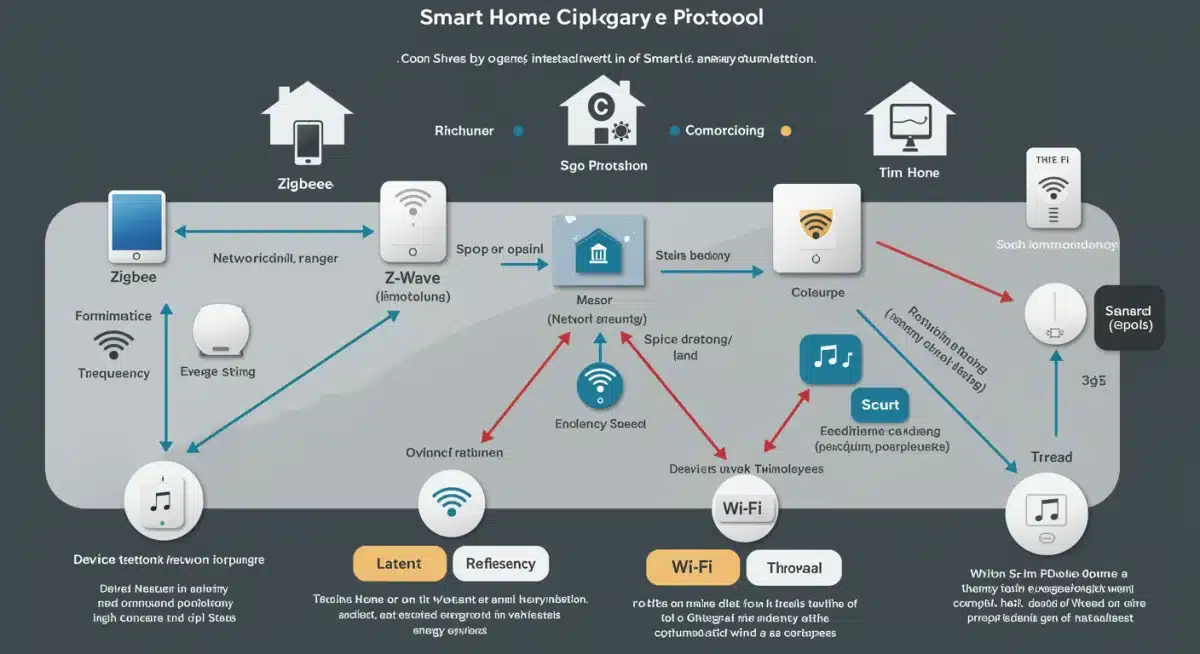
Beyond the brand ecosystems, smart home devices communicate using various wireless protocols. These protocols are the invisible languages that allow your smart light bulb to talk to your smart hub, or your doorbell to send an alert to your phone. Understanding them is crucial for assessing true compatibility.
Different protocols offer varying ranges, power consumption, and data transfer rates. Some are designed for low-power sensors, while others handle high-bandwidth video streams. A device’s compatibility isn’t just about its brand; it’s about the communication standard it adheres to.
Key Communication Protocols
- Wi-Fi: Ubiquitous and high-bandwidth, Wi-Fi is common for devices requiring significant data transfer, like smart cameras and streaming devices. However, it can consume more power and potentially overcrowd your network.
- Zigbee: A mesh network protocol ideal for low-power devices like smart lights, sensors, and switches. Zigbee devices can relay signals to each other, extending the network’s reach.
- Z-Wave: Another mesh network protocol, Z-Wave operates on a different radio frequency than Wi-Fi, reducing interference. It’s known for its reliability and security in home automation.
- Bluetooth (LE): Primarily used for direct device-to-device communication over short distances, often for initial setup or connecting peripherals like smart locks to a nearby hub.
- Thread: A newer, IP-based mesh networking protocol designed for low-power IoT devices. Thread aims to offer greater interoperability and security, often seen in devices supporting Matter.
The emergence of new protocols and the evolution of existing ones mean that the compatibility landscape is constantly shifting. Devices often support multiple protocols, but knowing which ones are essential for your specific setup will prevent you from purchasing incompatible hardware.
In essence, the choice of protocols dictates the robustness and responsiveness of your smart home. A balanced approach, utilizing the strengths of different protocols, often leads to the most efficient and reliable system.
The Role of Matter in 2026: A Game Changer?
In the complex world of smart home compatibility, a new standard called Matter has emerged as a potential unifier. Launched by the Connectivity Standards Alliance (CSA), Matter aims to simplify the smart home experience by creating a common language for devices, regardless of their manufacturer or underlying protocol.
Matter’s promise is significant: it seeks to enable devices from different brands and ecosystems to work together seamlessly, reducing the frustration of incompatible hardware. This could be a pivotal development for smart home enthusiasts and newcomers alike.
What Matter Means for Compatibility
- Universal Language: Matter acts as an application layer on top of existing IP-based protocols like Wi-Fi, Thread, and Ethernet. This means a Matter-certified device can communicate with any Matter controller, regardless of its ecosystem (e.g., Apple HomeKit, Google Home, Amazon Alexa).
- Simplified Setup: The standard aims to streamline the pairing and setup process, making it easier for users to add new devices to their smart home.
- Enhanced Security: Matter incorporates robust security features, providing end-to-end encryption and secure device authentication.
- Future-Proofing: Devices supporting Matter are designed to be more future-proof, as they can adapt to new ecosystem integrations without requiring hardware upgrades.
While Matter is a promising development, its full impact is still unfolding in 2026. Not all devices are Matter-certified, and the transition will take time. Consumers should look for the Matter logo when purchasing new devices, especially for core components like smart hubs and lighting.
The adoption of Matter could significantly reduce the financial risk associated with incompatible purchases. By standardizing communication, it empowers consumers to build more flexible and resilient smart homes. However, it requires careful consideration of current device compatibility and future upgrade paths.
Avoiding Costly Mistakes: Pre-Purchase Due Diligence
The allure of a new smart gadget can be strong, but impulse purchases often lead to compatibility headaches and significant financial losses. Before clicking ‘add to cart,’ thorough research and planning are essential to ensure your new device integrates smoothly into your existing smart home setup.
Many consumers learn the hard way that not all smart devices are created equal, and not all smart devices play well together. A proactive approach to compatibility can save you both money and aggravation in the long run.
Essential Pre-Purchase Checks
- Ecosystem Compatibility: Always verify if the device explicitly states compatibility with your chosen ecosystem (e.g., ‘Works with Alexa,’ ‘Works with Google Home,’ ‘Works with Apple HomeKit’). Look for official certifications.
- Protocol Support: Understand which wireless protocols the device uses (Wi-Fi, Zigbee, Z-Wave, Thread, Bluetooth). Ensure your existing hub or gateway supports these protocols.
- App and Software Requirements: Check if the device requires a separate app or if it integrates directly with your main smart home app. Also, verify operating system compatibility for your smartphone or tablet.
- Reviews and Forums: Read user reviews, especially those that mention integration with other brands or specific ecosystems. Smart home forums can offer invaluable real-world insights into compatibility issues.
- Future-Proofing (Matter): Prioritize devices that support Matter, as they are more likely to offer broader and more reliable compatibility in the future.
Ignoring these crucial steps can lead to a collection of isolated smart devices that don’t communicate, creating a ‘dumb’ smart home. The financial impact of such mistakes can be substantial, as returning or replacing devices can be cumbersome and costly.
Ultimately, a few minutes of research before buying can prevent hours of troubleshooting and potentially hundreds of dollars in wasted expenses. Think of it as an investment in the seamless operation of your smart home.
The Financial Impact of Incompatible Devices
The excitement of building a smart home can quickly turn into frustration and financial drain when devices refuse to cooperate. The cost of incompatibility extends far beyond the initial purchase price, encompassing wasted time, additional hardware, and even compromised home security.
Many consumers underestimate the cumulative financial impact of poor compatibility planning. It’s not just about a single device; it’s about the entire ecosystem’s efficiency and reliability.
Hidden Costs of Incompatibility
- Wasted Purchases: The most obvious cost is buying devices that simply don’t work with your existing setup, rendering them useless or requiring costly returns.
- Additional Hubs/Bridges: To bridge compatibility gaps, you might need to purchase extra hubs or bridges, adding to your overall expenditure and system complexity.
- Increased Energy Consumption: Inefficiently integrated devices might not optimize their power usage, leading to higher electricity bills if they remain constantly active or require multiple power sources.
- Time and Effort: The time spent troubleshooting, researching workarounds, or dealing with customer support for incompatible devices represents a significant, often overlooked, cost. Your time is valuable.
- Compromised Security: Patchy integration can create security vulnerabilities, particularly if devices are operating on outdated software or are connected through insecure bridges.
- Reduced Home Value: A disjointed smart home, rather than an integrated one, might not add the expected value to your property if it doesn’t offer a cohesive and intuitive experience.
The financial ramifications underscore the importance of a well-thought-out smart home strategy. Every incompatible device is not just a gadget; it’s a potential drain on your resources and a source of unnecessary stress. Planning for compatibility from the outset is an investment that pays dividends in both convenience and cost savings.
Best Practices for Building a Compatible Smart Home in 2026
Building a truly smart home that functions harmoniously requires more than just buying the latest gadgets. It demands a strategic approach focused on compatibility, scalability, and long-term value. In 2026, with the rapid evolution of smart home technology, adhering to best practices is more critical than ever.
A well-planned smart home is an efficient smart home, saving you money, time, and frustration. It’s about creating a seamless experience, not a collection of isolated smart devices.
Strategic Planning and Implementation
- Start with a Core Ecosystem: Choose one primary smart home ecosystem (e.g., Alexa, Google Home, HomeKit, SmartThings) and stick to it for most of your core devices. This simplifies management and enhances interoperability.
- Prioritize Matter-Certified Devices: As Matter gains traction, prioritize purchasing devices with Matter certification. This offers the best chance for future-proof compatibility across different ecosystems.
- Assess Your Network Infrastructure: Ensure your home network (Wi-Fi router, mesh system) can handle the increased load of numerous smart devices. Consider upgrading if necessary to support bandwidth-intensive devices like cameras.
- Read the Fine Print: Always check product specifications for explicit compatibility statements, required hubs, and supported protocols before making a purchase.
- Phased Implementation: Instead of buying everything at once, build your smart home incrementally. Start with essential devices and gradually expand, testing compatibility at each stage.
- Regular Updates: Keep all your smart devices and hubs updated with the latest firmware. Manufacturers often release updates to improve compatibility, security, and performance.
- Consider Professional Installation/Consultation: For complex setups or large homes, consider consulting with a smart home professional. Their expertise can save you from costly mistakes and ensure optimal integration.
By following these best practices, you can mitigate the risks of incompatibility and build a smart home that truly enhances your living experience. It’s about making smart choices today for a smarter, more efficient future.
The Future of Smart Home Interoperability
The smart home industry is in a constant state of flux, with new technologies and standards emerging regularly. Predicting the exact trajectory can be challenging, but certain trends indicate a clearer, more integrated future for smart home interoperability beyond 2026.
The drive towards greater compatibility is not just a consumer demand; it’s a market imperative. Manufacturers recognize that a fragmented ecosystem hinders broader adoption and limits growth.
Emerging Trends and Predictions
- Matter’s Continued Dominance: Matter is expected to become the de facto standard for smart home communication, leading to a much more unified ecosystem where device compatibility is less of a concern. More manufacturers will adopt it, and existing devices will receive software updates to support it where possible.
- AI and Machine Learning Integration: Advanced AI will play a greater role in predicting user needs and proactively managing devices, leading to more intuitive and truly autonomous smart homes. This will require seamless data exchange between devices and platforms.
- Enhanced Security Measures: As smart homes become more pervasive, security will remain a top priority. Future interoperability standards will likely incorporate even more robust encryption and authentication protocols to protect user data and privacy.
- Edge Computing: More processing will occur on the devices themselves (at the ‘edge’ of the network) rather than relying solely on cloud servers. This can improve responsiveness, reduce latency, and enhance privacy.
- Greater Energy Efficiency: Future smart home systems will be designed with energy conservation in mind, with devices optimizing their operation and communicating efficiently to reduce overall power consumption.
The vision for the future is a smart home where devices from any manufacturer can effortlessly communicate and collaborate, creating a truly intelligent and responsive living environment. This future relies heavily on the continued development and widespread adoption of universal standards like Matter.
For consumers, this means that while vigilance regarding compatibility remains important today, the long-term outlook is one of increasing simplicity and seamless integration. Preparing for this future by understanding current trends will ensure your smart home remains cutting-edge and efficient.
| Key Point | Brief Description |
|---|---|
| Ecosystem Choice | Selecting a primary ecosystem (Alexa, Google Home, HomeKit) is crucial for device integration. |
| Protocol Understanding | Knowing protocols like Wi-Fi, Zigbee, Z-Wave, and Thread ensures device communication. |
| Matter Standard | Matter aims to unify device compatibility across platforms, reducing integration issues. |
| Financial Impact | Incompatible devices lead to wasted money, extra hardware costs, and increased troubleshooting time. |
Frequently Asked Questions About Smart Home Compatibility
The most common issue is devices from different manufacturers failing to communicate effectively within a single smart home ecosystem. This often stems from differing communication protocols or lack of integration with a chosen hub, leading to isolated functionalities.
Matter provides a universal application layer that allows certified devices to communicate seamlessly across various smart home ecosystems, regardless of their underlying network protocol. It acts as a common language, simplifying setup and integration.
While sticking to one brand can simplify compatibility, it might limit your options for specific device features or price points. A better approach is to choose a primary ecosystem and then select devices that are certified to work with that ecosystem, regardless of brand.
Always check for explicit compatibility statements like ‘Works with Alexa,’ ‘Works with Google Home,’ or ‘HomeKit compatible.’ Also, verify the supported communication protocols (Wi-Fi, Zigbee, Z-Wave, Thread) and prioritize Matter-certified products for future-proofing.
Ignoring compatibility can lead to wasted purchases of unusable devices, the need for additional costly hubs, increased energy consumption, and significant time spent troubleshooting. It ultimately diminishes the value and convenience of your smart home investment.
Conclusion
Navigating the intricate world of smart home device compatibility in 2026 doesn’t have to be a daunting task. By understanding the core ecosystems, communication protocols, and the unifying potential of Matter, consumers can make informed decisions that avoid costly mistakes and unlock the full potential of their connected homes. Proactive research, strategic planning, and a focus on certified devices are your best allies in building a truly intelligent, seamless, and financially sound smart home environment. The future of smart living is within reach, provided you equip yourself with the right knowledge today.